


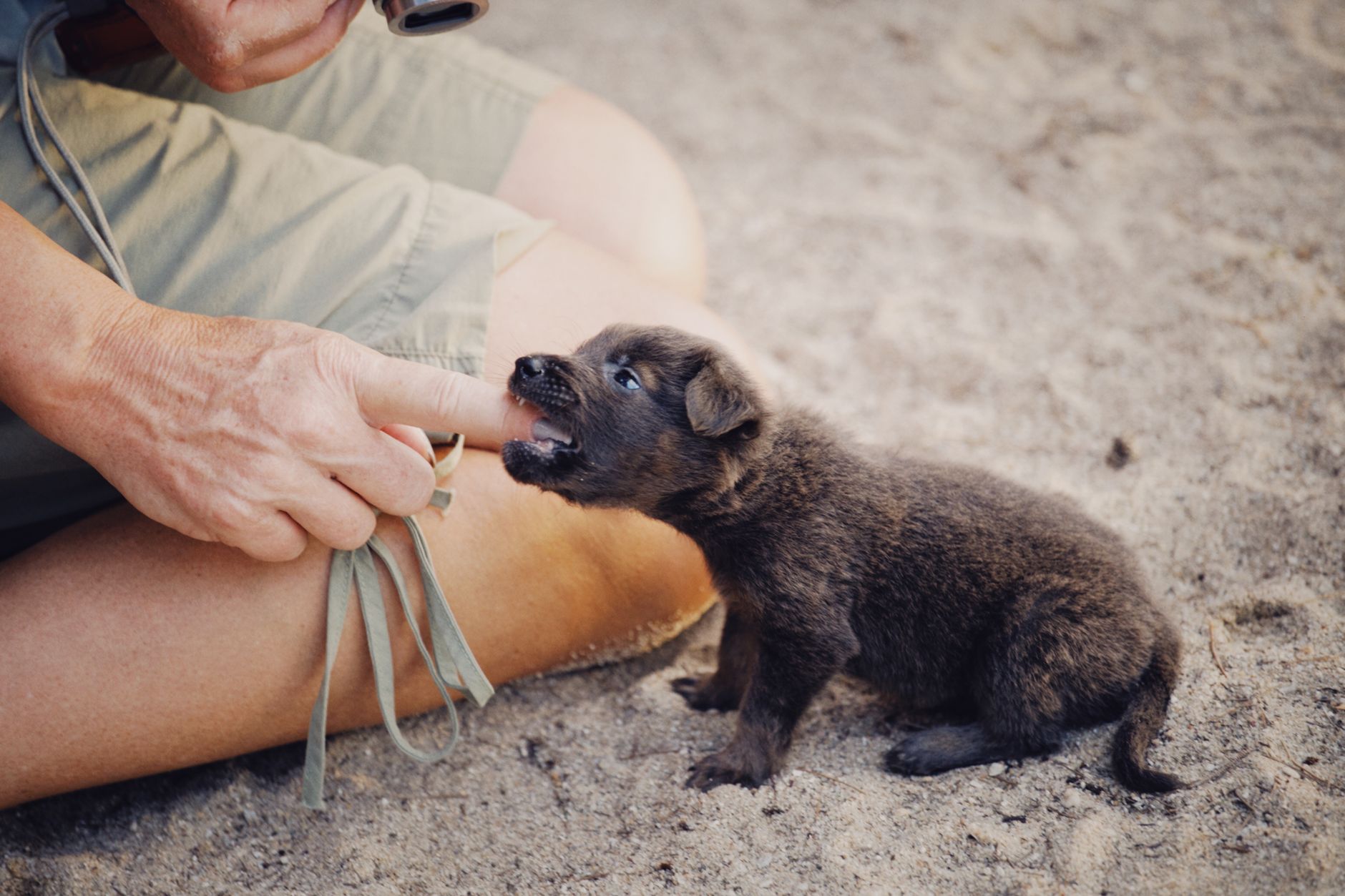
Puppy biting, often referred to as “puppy mouthing,” is a normal developmental stage. Puppies explore their environment primarily through their mouths. Because they lack hands, they use their teeth to interact with objects, siblings, and human caretakers. While natural, this behavior requires consistent, gentle guidance to ensure the dog learns bite inhibition—the ability to control the force of their jaws. Punishing a puppy for biting often backfires, as it can induce fear, damage the human-animal bond, and potentially escalate defensive aggression. Instead, focusing on positive reinforcement and redirection fosters a calmer, more predictable canine companion.
Understanding the Roots of Puppy Mouthing
Puppies bite for several distinct reasons, and identifying the motivation behind the behavior is the first step toward resolution. The primary driver is exploration. Just as human infants reach out to touch items, puppies use their mouths to test the texture, scent, and resistance of everything they encounter.
Teething also plays a significant role. Between the ages of three weeks and six months, puppies lose their deciduous teeth and transition to permanent adult teeth. This process can be uncomfortable, leading to an increased need to gnaw on objects to soothe sore gums. Furthermore, overstimulation often triggers biting. When a puppy becomes overtired or over-excited, their impulse control decreases significantly, often resulting in “zoomies” or frantic, nipping behavior directed at the nearest moving target—usually a human’s ankles or hands.
The Strategy of Redirection
Redirection is the cornerstone of non-punitive training. The goal is not to suppress the puppy’s need to chew, but to redirect that energy toward appropriate outlets. When a puppy begins to mouth a hand or clothing, the immediate response should be to offer a suitable chew toy.
- Keep toys accessible: Always have a variety of textures—rubber, rope, and soft fabrics—readily available in every room.
- The “Trade” technique: If the puppy has an off-limits item, offer a high-value toy in exchange. This teaches the puppy that letting go of an item leads to a superior reward.
- Encourage appropriate play: Use long toys, such as tug ropes, to create distance between the puppy’s teeth and human skin, providing a safe outlet for their natural prey drive.
Developing Bite Inhibition
Bite inhibition is the process by which a dog learns that human skin is extremely sensitive. In a litter, if a puppy bites a sibling too hard, the sibling will yelp and stop playing. This immediate feedback loop teaches the puppy to regulate the pressure of their jaw. Humans can replicate this social feedback in a controlled manner.
When a puppy bites, the most effective response is to become boring. If the biting occurs during play, calmly stop the interaction. Stand up, cross your arms, and look away. By removing attention, the human signals that biting results in the immediate end of the fun. Once the puppy settles or sits, play can resume. This teaches the puppy that calm behavior is the key to maintaining social interaction, while biting leads to social isolation.
Comparison of Training Approaches
The following table outlines the differences between punitive measures and positive, redirection-based training methods.
| Feature | Punitive Measures | Positive Redirection |
|---|---|---|
| Primary Goal | Stop behavior through fear | Teach impulse control |
| Long-term Effect | Potential for aggression/anxiety | Builds trust and confidence |
| Skill Acquisition | Puppy learns to avoid humans | Puppy learns to self-regulate |
| Consistency | Often leads to erratic behavior | Creates predictable patterns |
| Bonding | Damages owner-pet relationship | Strengthens social connection |
Managing Overtiredness and Energy
A common mistake in puppy rearing is assuming that a “naughty” puppy simply needs more exercise. In reality, a biting puppy is frequently an overtired puppy. Puppies require significant amounts of sleep—often 18 to 20 hours a day. When they are exhausted, their ability to regulate their emotions and impulses vanishes, leading to increased nipping.
Implementing a structured nap schedule is essential. If a puppy begins to display frantic, biting behavior, it is often a cue that they are overstimulated and require a quiet space to rest. Using a crate, a playpen, or a quiet room as a designated “nap zone” allows the puppy to decompress. This is not a punishment, but a management tool to ensure the puppy receives the necessary rest to function well during waking hours.
Addressing Environmental Factors
The environment should be set up to prevent biting opportunities. This is known as proactive management. If a puppy consistently bites at trouser legs, consider limiting access to areas where they are most likely to rehearse this behavior until they have better impulse control.
- Exercise needs: Provide adequate physical and mental stimulation. A tired puppy is generally a better-behaved puppy.
- Mental enrichment: Use puzzle feeders and scent games to tire the puppy mentally. This reduces the frustration that often leads to excessive mouthing.
- Consistency among family members: Every person in the household must respond to biting in the same way. If one person allows mouthing while another discourages it, the puppy will become confused, leading to erratic behavior.
Frequently Asked Questions
Why does my puppy bite harder when I say “no”?
Puppies often interpret loud, high-pitched, or emotional vocalizations as exciting play. If you shout “no,” the puppy may perceive this as an invitation to engage in more vigorous, energetic play, which often involves more biting. Staying calm and silent is more effective.
How long does the biting phase last?
Most puppies significantly reduce their mouthing behavior once their adult teeth have fully erupted, usually around six months of age. Consistency in training during these formative months ensures the behavior tapers off naturally.
Is it okay to use time-outs?
Time-outs are effective if used correctly. A time-out should involve moving the puppy to a safe, boring area for a very short period (30–60 seconds). It is meant to provide a “reset” button for a puppy that has become too excited to listen, rather than serving as a form of punishment.
What if the puppy bites out of frustration?
Frustration biting occurs when a puppy cannot reach a desired goal. This is a sign that the puppy needs help learning how to cope with disappointment. Teaching the “sit” or “stay” command can help the puppy learn to wait for rewards, which builds the necessary impulse control to handle frustration more gracefully.
Final Considerations for Success
Stopping puppy biting is a process that requires patience, observation, and a commitment to positive reinforcement. By viewing the behavior as a developmental milestone rather than a character flaw, owners can better support their pets through the transition to adulthood. The goal is to nurture a dog that understands how to interact safely with humans through self-regulation and clear communication.
Consistency remains the most important factor in this training journey. When every interaction is guided by the same set of rules, the puppy learns quickly what is expected. Over time, the need for redirection decreases as the puppy develops the bite inhibition and self-control necessary to navigate the world without relying on their teeth. Focus on providing appropriate outlets, ensuring the puppy gets sufficient rest, and maintaining a calm, objective demeanor during training sessions. With these practices, the biting phase will pass, leaving behind a well-adjusted, confident, and trusting canine companion.
Featured Image Credit: Generated/Sourced via Runware.ai.
Disclaimer: This article is AI-generated for informational and educational purposes. While we strive to provide high-quality context and authority, the content should not be used as professional advice. The author/website assumes no liability for external links or factual omissions.
